

Does More Revenue Actually Make a Construction Company More Profitable?
Not always. A contractor can add jobs, employees, and revenue while the owner works longer hours and takes home little more than before. Revenue keeps a business moving, but profitability, financial controls, the right team, and an owner’s ability to step away from day-to-day firefighting determine whether that growth actually creates wealth.
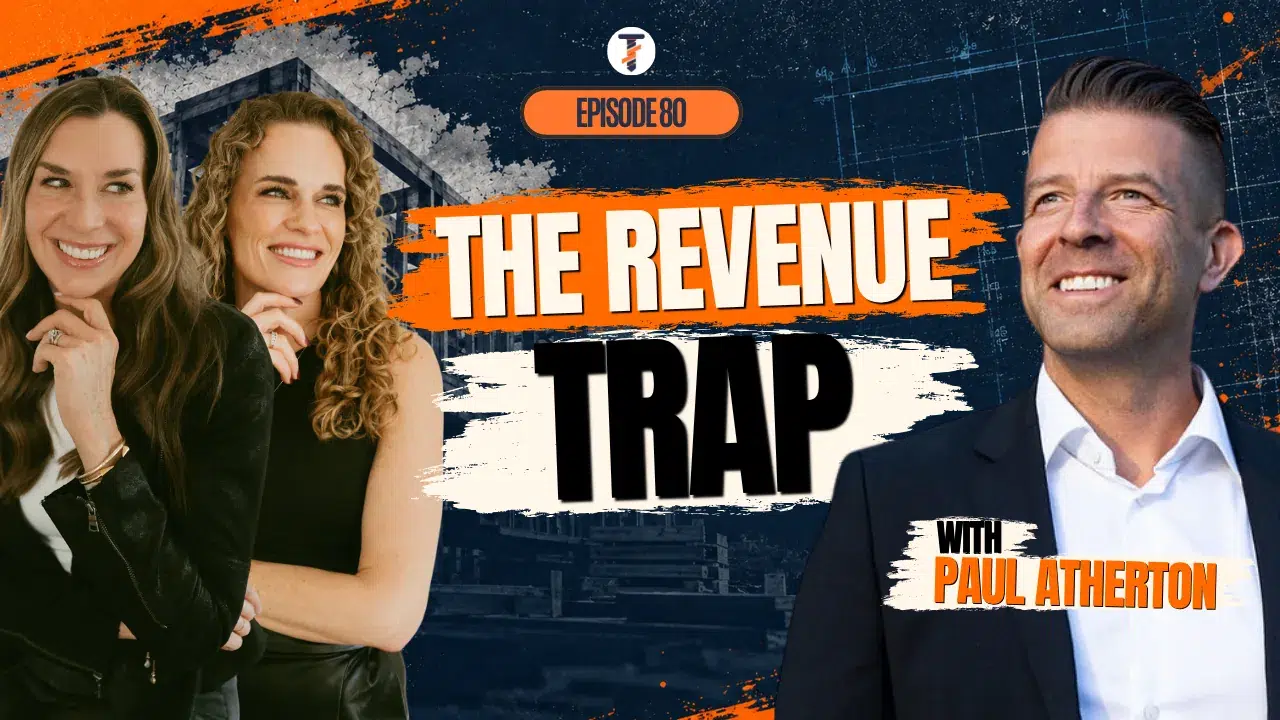
Paul Atherton, Co-Founder and CEO of HighSpire, joined Amanda Joyce and Devon Hayes on Trades Secrets to talk about why so many construction company owners get stuck chasing a bigger top-line number.
HighSpire works with general contractors on building more self-managed businesses and, eventually, using that operating foundation to pursue real estate development and investment. Its current Construction Business Mastery program includes financial management, leadership, operations, marketing, sales, and systems intended to help owners build companies that can operate with less dependence on them.
The bigger theme of the conversation was simple: a larger company is not automatically a wealthier one.
🎧 Care to listen instead? This post is inspired by our Trades Secrets episode, The Revenue Trap: When Building a Bigger Construction Company Stops Making You Wealthier with Paul Atherton.
Revenue Can Hide a Lot of Problems
Paul sees contractors become so focused on revenue that they start treating themselves as the solution to every problem in the company. Customer issue? The owner handles it. Project problem? The owner is back in the field. Staff issue? Another fire to put out.
The company may continue growing while the owner works 70 or 80 hours a week and slowly gives up the things the business was supposed to provide in the first place. Paul has seen that pressure affect health, family relationships, staff retention, and relationships with vendors and trades, all while the owner keeps chasing the next revenue milestone.
The shift happens when the owner stops thinking like the company’s chief firefighter and starts thinking about where their time produces the highest return.
That usually requires trusting other people with work the owner used to believe only they could do.

The First Big Hire Is Often a Project Manager
When Devon asked Paul where a contractor should start if the goal is to build a self-managed company, he did not give a complicated answer.
Hire a great project manager.
A strong PM takes responsibility for budgets, schedules, trades, and customer relationships so the owner can spend less time managing work in the field. Paul said the companies he has watched make this transition successfully can often trace a major part of their growth back to that hire.
That does not mean hiring one before the business can support the salary. Paul recommends making sure the company has enough working capital to sustain roughly three to six months and that it understands the profitability of the jobs already in its pipeline.
Once the owner is no longer spending most of the week in the field, that time can shift toward sales, financial controls, leadership, and working more closely with the people responsible for generating demand.
Paul also pointed contractors toward HighSpire’s free resource, The 6 SOPs That Separate Good PMs From Great Ones, for more detail on hiring and developing that role.
Know Whether Your Projects Are Actually Making Money
Getting out of the field only works if the owner still has a clear view of project performance.
One metric Paul recommends watching is gross profit per week, or GP/week. In simple terms, take the gross profit expected from a project and compare it with the number of weeks where substantial billing is taking place.
If the forecasted GP/week begins dropping, the project may be moving off course before the final financial result makes the problem obvious.
That is what makes the metric useful. By the time a contractor finishes a job and realizes $50,000 of profit disappeared, there is not much left to fix. A leading indicator gives the team a chance to investigate while something can still be done.
This is also why revenue alone tells an incomplete story. A $10 million company with weak margins, poor cash flow, and an exhausted owner may be less healthy than a smaller company that understands exactly where it makes money.

Protecting the Owner’s Time Is Part of the Business Strategy
One of Paul’s more surprising observations was that the best construction business owners he knows tend to be very protective of their personal lives.
They make room for their families, vacations, relationships, and things outside the company instead of treating constant exhaustion as proof that they are serious entrepreneurs.
That balance can actually make them better leaders. Paul described those owners as calmer, more trusting, and less likely to run the company in permanent panic mode.
A self-managed company is not simply about doing less work. It is about moving the owner’s attention toward the work that actually requires the owner.
That may mean sales and business development today. Eventually, even parts of that role can be handed to a strong team.
Marketing Works Better When the Owner Makes Time for It
Paul was equally direct about marketing.
Contractors should not expect an agency to understand every detail of their business after one kickoff meeting. The companies that get the most from a marketing relationship spend time helping the agency understand their customers, their market, what makes the company different, and what happens after a lead comes in.
That is something we see at Elevation Marketing™ too. Our strongest contractor partnerships are collaborative. We bring the marketing expertise, but the contractor brings years of knowledge about the craft, customer, sales process, and local market.
Paul also emphasized consistency in branding. A contractor does not need to chase every social trend or reinvent the message every month. Once you understand what matters to your target customer and why they should choose you, keep communicating it clearly and repeatedly.
The homeowner is not thinking about your brand nearly as often as you are.
Repetition is part of the job.
Build a Company That Gives Something Back to the Owner
The revenue trap is not really about revenue being bad.
Growth is valuable when the company underneath it is healthy.
The problem starts when every additional project requires more of the owner’s personal time, adds more chaos, and produces very little additional wealth.
A healthier construction business has people who can own important roles, systems that make expectations clear, financial controls that identify problems early, and marketing that consistently brings the right opportunities into the pipeline.
That is also the direction behind HighSpire’s Construction Business Mastery program, which focuses on building a self-managed and profitable operating company before owners move into larger wealth-building opportunities such as real estate development.
At Elevation Marketing™, our role is to build the marketing side of that healthier business. More leads are useful when the company understands which opportunities it wants, how to close them, and how profitable growth fits into the owner’s larger goals.
Learn more about the Elevation Marketing™ team, or start a conversation with Elevation Marketing™ if your construction company needs a marketing strategy built around profitable growth instead of another vanity metric.
Connect With Paul Atherton & HighSpire
Learn more about Paul and HighSpire at HighSpire.com, or connect with Paul on LinkedIn.
You can also follow HighSpire on Facebook, Instagram, LinkedIn, and YouTube.
For more resources, watch The 6 SOPs That Separate Good PMs From Great Ones or explore the HighSpire Construction Business Mastery Program.