

Why Is $99 Junk Removal Such a Risky Growth Strategy?
Low pricing only works when the numbers behind it work. Barry Hartman used a simple example: if a lead costs $50 and the company closes half of those leads, it costs $100 to acquire one customer. A $99 job has already spent its revenue before labor, fuel, disposal, software, or overhead enter the picture.
That math is easy to miss when the owner is still driving the truck.
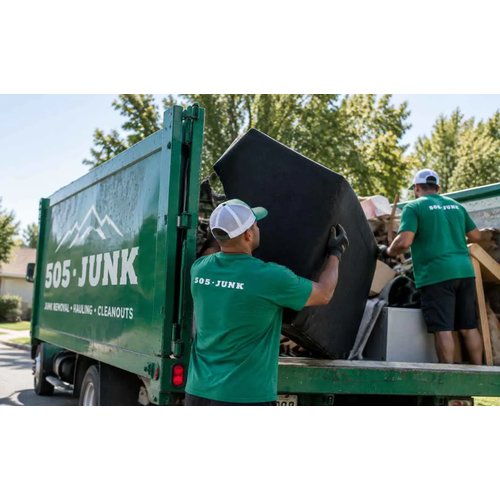
Barry knows because he has been there. He and business partner Scott Foran started 505-Junk with an old pickup truck and a $700 trailer. Today, Barry also works with junk removal owners through Bolt Accelerator, helping them avoid some of the expensive lessons he learned while building the business.
He joined Amanda Joyce and Devon Hayes on Trades Secrets to talk about pricing, commercial growth, hiring, company culture, and why generating more leads does not solve a business that has not figured out the fundamentals.
🎧 Care to listen instead? This post is inspired by our Trades Secrets episode, The $99 Junk Removal Trap: Why More Leads Won’t Fix a Bad Business.
Cheap Jobs Get Expensive as the Company Grows
A $99 job can look pretty good when the owner owns the truck, does the labor, answers the phone, and treats most of the day’s revenue like income.
Then the business starts becoming a business.
Advertising gets added. Employees need to be paid. Software shows up on the credit card. There is drive time between jobs, fuel in the truck, disposal fees at the other end, insurance, management, and eventually people in the office who are not directly hauling anything.
Barry explained that this is where low pricing starts falling apart. An owner may think five $100 jobs means a $500 day, but that calculation ignores what it actually costs to acquire and fulfill those jobs.
His example was straightforward:
$50 cost per lead ÷ 50% close rate = $100 customer acquisition cost.
The company has spent $100 before the truck leaves the yard.
This does not mean every company needs to be the highest-priced junk removal service in town. It means pricing should come from the economics of the business, not from looking at a national competitor and deciding that being half as expensive must be a good strategy.
More Leads Won’t Repair a Bad Business Model
This is where marketing and operations collide.
A company with the wrong pricing, weak close rates, poor routing, inconsistent service, or high labor costs does not necessarily need more leads. More leads may just give those problems more opportunities to lose money.
That is something we think about constantly at Elevation Marketing™. Our paid media strategy is not built around generating the largest possible number of calls. We want to know whether the leads are the right jobs and whether the business can profitably turn them into customers.
We have made the same point in our article on prequalifying leads for quality growth. Lead volume is only one part of the equation. Pricing, sales, capacity, and profitability have to support what happens after the phone rings.
Barry learned that lesson early. A mentor helped him and Scott establish an operations manual, inbound sales process, Google Ads, and their first hire within the early stages of 505-Junk. He credits that structure with helping them build for scale rather than simply creating a job for themselves.
Commercial Junk Removal Requires a Different Conversation
One of the more interesting parts of Barry’s story is how 505-Junk expanded into commercial and construction work.
The service may still involve removing material, but the buyer is different.
A residential customer may care deeply that the company is local, trustworthy, environmentally conscious, and easy to work with. A commercial property manager may be far more interested in tenant turnover, turnaround time, budget, and how quickly an empty unit can start producing revenue again.
Barry gave a simple example. Walking into a property management company and saying, “We’re local. Do you need junk removal?” does not give the buyer much reason to care.
Showing them how faster clear-outs could reduce vacant days changes the conversation.
That shift has required a lot of outbound sales and relationship building. Barry said most of the company’s top commercial relationships came through prospecting, meetings, lunch-and-learns, account management, and the long process of learning how those businesses operate.
It is a good reminder for contractors in any trade: moving into a new market is not just doing the same marketing for a bigger customer. You need to understand what that customer values and speak their language.

Culture Shows Up When Nobody Is Watching
Barry also shared one of the best culture stories we have heard on Trades Secrets.
During an estate clean-out, the 505-Junk crew found roughly $3,000 in cash, around $24,000 in uncashed government checks, and valuable jewelry that belonged to the client’s family.
The important part was that Barry was not standing over them when they found it.
The crew called management, everything was collected, and the team later returned it to the client.
That tells you much more about company culture than an office basketball hoop or a good holiday party.
Barry described culture as the standard people are held to every day. That includes training, accountability, inspecting the work, having difficult conversations when necessary, and creating room for employees who want to grow.
Some of the people who started in 505-Junk trucks years ago eventually moved into leadership positions. That kind of growth does not happen because the company occasionally plans something fun. It happens when people understand what good work looks like and know there is an opportunity if they keep meeting the standard.
Starting Is Easy. Building the Business Is Hard.
Barry was especially direct about the idea that junk removal has a low barrier to entry.
Starting the company can be simple. Get the business registered, find a truck and trailer, open a bank account, and start looking for customers.
Building something that can survive without the owner is entirely different.
Sales is hard. Hiring is hard. Training is hard. Cash flow is hard. Marketing is hard. Keeping good people is hard. Building systems that someone else can follow is hard.
Barry’s advice was not meant to discourage entrepreneurs. He simply thinks they should know what they are signing up for.
That philosophy is also behind Bolt Accelerator. The program focuses specifically on junk removal businesses, with coaching around marketing, sales, operations, finance, and leadership rather than pretending that another handful of leads will solve every problem.
The goal is eventually to build a company with strong systems, people, profitability, and repeatable revenue so the owner is no longer required to personally hold the whole thing together.
Better Marketing Works Best on a Better Business
The $99 junk removal trap is really bigger than pricing.
It is the belief that one tactic can compensate for a business that has not figured out how it makes money.
Lower prices will not fix weak sales.
More leads will not fix bad margins.
More advertising will not fix poor service.
And a bigger company is not necessarily a better company if the owner simply scales the problems along with the revenue.
At Elevation Marketing™, we want contractors to grow, but the goal is qualified demand that supports a healthy business. That means understanding the jobs you actually want, what it costs to acquire them, what happens when the lead reaches your team, and whether the work produces the return you expected.
Learn more about the Elevation Marketing™ team, or start a conversation with Elevation Marketing™ if you are getting plenty of leads but still wondering why the numbers do not feel right.
Connect With Barry Hartman
Learn more about Barry’s junk removal business at 505-Junk and his coaching programs at Bolt Accelerator. You can also follow Barry on Instagram, LinkedIn, and YouTube.
For more from the Bolt team, follow Bolt Accelerator on Instagram and LinkedIn.