


Why Do I Need Service Area Pages on My Website?
Service area pages, dedicated webpages that target a specific location where a contractor provides services, help businesses clearly communicate the regions they serve. This can be cities, neighborhoods, or broader service zones. Each page should be tailored to reflect the needs and expectations of customers in that specific area.
Search engines use location-based signals to determine which businesses to show for local searches. So, when structured correctly, location-specific pages improve AI visibility, reduce duplicate content issues, and help connect the right customers with the right services.
They also serve as a key building block in creating long-term visibility and a consistent, web-trusted brand across multiple markets.
How Do Service Area Pages Improve Visibility?
Service area pages help contractors clearly show where they work and connect with customers searching in those locations. For businesses with multiple regions, these pages improve how search engines understand coverage and match services to local intent.
Without these pages, visibility can be inconsistent, even for established companies. When paired with well-structured FAQ sections, they also improve how content is interpreted in AI-driven results and featured snippets.
Working with Elevation Marketing™, this approach can support long-term visibility through continuous optimization. It strengthens credibility, improves the user experience, and helps build a web-trusted brand that performs consistently across all service areas.
How Do Service Area Pages Affect Search Results?
Service area pages play a key role in helping contractors appear in local search results. Search engines rely on clear geographic signals, and these pages provide structured content that connects a specific location with the services offered. When each page is tailored to a particular area, it becomes easier for search engines to match user intent with the most relevant provider.
These pages also support consistent visibility across multiple locations, especially when part of an ongoing optimization strategy. Instead of relying on a single homepage or generic content, service area pages expand your digital footprint in a way that compounds over time by:
- Targeting location-specific keywords and search intent
- Strengthening relevance signals for search engines
- Supporting “near me” and local queries
- Expanding coverage across multiple service regions
- Improving alignment between content and user expectations
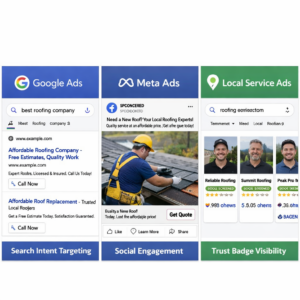
This approach focuses on measurable outcomes and long-term growth rather than short-term spikes by helping you show up in AI results. Only 8% of users who see an AI summary on Google click a traditional link over a source from the AI summary, underscoring the need to be seen by AI.
How Do I Make an Effective Service Area Page?
An effective service area page is built with clarity, relevance, and consistency. Each page should be unique to its location while still following a structured format that search engines and users can easily understand. It should provide:
- Unique, non-duplicated content tailored to each location
- Clear descriptions of services offered in that specific area
- Local proof such as testimonials, case studies, or project examples
- Internal links to related services and location pages
- Trust signals like reviews, certifications, and credentials
Go beyond basic descriptions by including proof of work, localized messaging, and trust signals that build credibility. For contractors working with Elevation Marketing™, this means creating pages that are not only optimized for search but also designed to convert visitors into leads.
How Do I Structure for SEO and Users
A well-structured service area page helps both users and search engines quickly understand what you offer and where you operate. Clear organization improves readability, keeps visitors engaged, and ensures the most important information is easy to find. A recommended structure includes:
- A location-focused introduction that clearly identifies the service area
- A section outlining the services offered in that specific region
- Elements such as testimonials, reviews, or project highlights
- Internal links to related services or nearby locations
- A clear call-to-action that encourages users to take the next step
When content is logically arranged, it also increases the chances of ranking for local searches and capturing user intent.
A consistent structure across pages supports scalability and continuous optimization. It allows teams to expand into new locations without sacrificing quality, while maintaining a clear, repeatable framework that performs over time.
Following this structure ensures each page is both user-friendly and search-optimized. It creates a predictable experience for visitors while giving search engines the signals they need to properly index and rank each location-specific page.
Why Are FAQs Critical for Service Area Pages?
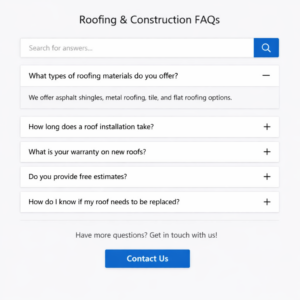
FAQs are a key component of effective service area pages because they address the specific questions customers are already asking. These questions often reflect real concerns about pricing, availability, process, and service expectations in a particular location. By answering them directly on the page, businesses reduce friction and make it easier for users to take the next step.
FAQs also help improve how content is interpreted by search engines and AI. Well-structured question-and-answer formats increase the chances of appearing in featured snippets and conversational search results. FAQs are part of a broader strategy to build authority, improve user experience, and strengthen long-term visibility through content that is both helpful and easy to understand.
FAQs About Service Pages and AI
How do customers find your services in a specific location?
Customers typically find service area pages through local search queries like “contractor near me” or searches that include a city or region name. Well-optimized pages help match those searches by clearly signaling where your business operates and what services you provide in that area.
What makes one page rank better than another?
Pages that rank well usually have unique, helpful content, clear location signals, and strong trust indicators like reviews or project examples. Consistency, internal linking, and ongoing updates also play a role in improving visibility over time.
Can one service area page target multiple cities?
It’s possible, but not ideal. Pages that focus on a single location tend to perform better because they align more closely with user intent. Separating locations into individual pages allows for more precise optimization and clearer relevance signals.
Should service area pages include pricing information?
Including general pricing guidance can be helpful, but exact pricing is not always necessary. Many contractors focus on explaining factors that influence cost, since pricing often varies by project, location, and scope of work.
How do service area pages support lead generation?
They attract users who are already searching for services in a specific location. By combining clear messaging, trust signals, and strong calls-to-action, these pages help convert local traffic into qualified leads.
Strengthen Your Local Visibility Today
Let the team at Elevation Marketing™ assist you in creating service area pages and strong, helpful FAQs to give your business a clear advantage in local search and AI-driven results. Build each page with:
- consistent structure
- real location relevance
- ongoing updates
Customers will find it easier to discover you and trust what they see. Over time, this approach creates momentum that supports steady visibility across every market you serve.
For contractors working with Elevation Marketing™, the focus is on building systems that last, not short-term fixes. If you’re ready to improve your local presence and turn more searches into qualified leads, connect with us to start the conversation. We build digital foundations you own, understand, and trust for the long run.